


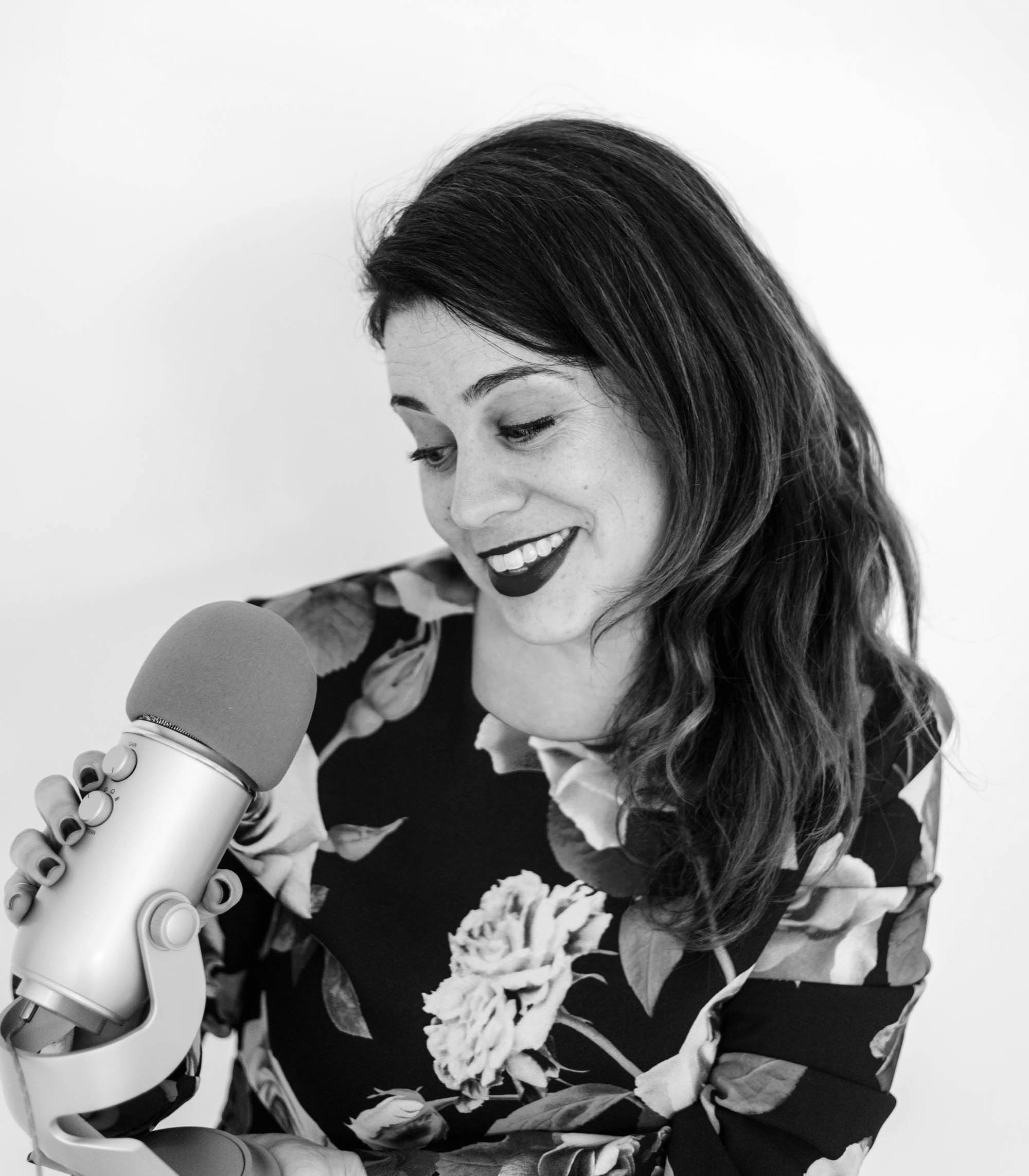
Yesterday, The Canadian Jewish News posted a podcast I recorded with Phoebe Maltz Bovy, about the vanishing of Jewish authors in fiction publishing.
For the last few years, it’s been something of an open secret among Jewish writers that we can’t, well, get published. I mean, sure. There are exceptions to the story. There are Jewish authors who had publishing contracts and established careers before October 7th. There are occasional bright lights who get through the blockade. But it’s bad. Horrifyingly bad, and getting worse.
There has been a published blacklist of Jewish authors1. There have been boycotts and cancelled events. It’s increasingly common to see agent’s list that they don’t work with, “Zionists or Nazis.”2 (When I see this I always wonder—do they have a lot of Nazis submitting skinhead romances? Is that a real problem? Or are they trying to equate Nazis with Jews? Honestly, I know the answer and it’s terrible.)
It’s hard for Jewish authors to get agents. It’s hard for them to keep agents. And given that agents work on commission and editors are just not acquiring books by Jewish authors… you can see why so many agents are now reluctant to sign Jews.
And for those of us who are public Zionists? Unless you already have a publishing contract, the data shows that you’re not going to get one. Not till things change.
After an eternity of Jews being a vital part of publishing and literature, we’re being shut out.
Freedom’s Just Another Word for Nothing Left to Lose
Like every other Jewish writer, I’ve kept my mouth shut because I understood that speaking out was tantamount to lighting my career on fire.
But in the past few months, I’ve been left with very little to lose. I’m not going to detail my professional traumas, but suffice to say, it’s been a rough run.
When I met Phoebe Maltz Bovy, she mentioned that part of her job is reviewing new releases with Jewish content, and in recent months, she hasn’t been able to find any books to review. I told her I knew why, and she convinced me to come on The Jewish Angle and talk about it.
Because nothing changes if nothing changes.
I decided this would be a good way to test the waters. I could be interviewed by a non-American Jewish publication, and see how it felt to tell the truth in front of a smaller supportive audience, before I pitched OpEd to huge mainstream publications in the U.S.3
Except, that’s not quite what happened.
Breaking Open
The podcast episode (which you can listen to below) was published yesterday, and on my social media alone, posts about the interview have been seen 100,000 times in 24 hours. Big names in the Jewish world have re-posted it. At least one agent shared it. And this morning an Israeli called me a “heroine” in Hebrew, which honestly made the whole thing worth it.
But with virality comes toxicity (and virulent antisemitism), and by the end of yesterday I felt raw and over-exposed. I’m an old hand at weathering viral moments, but it’s distinctly more fun to go viral over a entertaining review, or a beautiful essay. Going viral for speaking out about the impacts of a hate movement on your industry? Not actually that enjoyable.
Remembering My Own Voice
But there has been one enormous upside.
After years of being tangled up in my own silencing, I got to hear my own voice again. Literally, coming out of my speakers.
I used to do podcasts constantly. My training is in theatre. Put me in front of a mic, any mic, and I’m at my happiest.
When I hit play on The Jewish Angle, I heard the clip of me speaking that they opened the podcast with, and gasped.
“I still know what I’m doing,” I said to no-one in particular. “I still have my radio voice!”
When I played a snippet of the podcast for my son, his eyes widened with alarm.
“That’s you? Because it doesn’t sound like you.”
“Oh.” I said. “I guess you don’t remember my professional voice.”
But I remembered. And hearing my own voice again was steadying.
I’m still here. I have a story to tell. And finally I’m ready to tell it.
This is for all the missing Jewish novels. The ones relegated to drawers. The ones we all deserve to read. And for every other Jewish author struggling with industry blacklists in silence. I hope this helps in some tiny way.
Listen to the podcast, embedded above and linked here. It’s great. Thanks to Phoebe Maltz Bovy for her adept interviewing and to The Canadian Jewish News for publishing this.
Did you know that liking this post or leaving a comment helps it find more readers? If you are reading this as an email, there is a heart button at the top and bottom of this email. Click on it and it will take you to the Substack website where you can also leave a comment. If you are reading it online, again, just click the heart button at the top or bottom of this post. Your support makes this Substack possible.
I was searching in the JTA archives to find the article they wrote on the Jewish author blacklist, and horrifyingly, the first article listed was the one I thought was current. Then I realized it was from Germany in 1933. You cannot make this up.
I refuse to link to the agents doing this, on the grounds that they shouldn’t get attention. But if you care, Google will help lead you there.
I’m currently hard at work pulling data to write an OpEd. The stats on what has happened to Jews in fiction publishing in the past few years are worse than you’d even imagine. Worse than I thought they were. Stay tuned.
Do NOT read the comments! I’m so excited to listen💗. Thank you, once again, for stepping out in boldness and in bravery.
Well I’m delighted to find you here.